Health Care Provision During a Sporting Mass Gathering: A Structure and Process Description of On-Site Care Delivery

Johnston A, Wadham J, Polong-Brown J, Aitken M, Ranse J, Hutton A, Richards B, Crilly J. (2019). Health care provision during a sporting mass gathering: A structure and process description of on-site care delivery. Prehospital and Disaster Medicine.

Staff's Perception of the Intensive Care Outreach Nurse Role: A Multisite Cross-sectional Study. Journal of nursing care quality.

Johnston A, Wadham J, Polong-Brown J, Aitken M, Ranse J, Hutton A, Richards B, Crilly J. (2019). Health care provision during a sporting mass gathering: A structure and process description of on-site care delivery. Prehospital and Disaster Medicine.

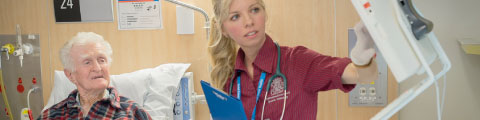
Understanding end-of-life care for older people presenting to the ED

Quick facts

Principal investigator:
Nemat Alsaba
Team members:
William 'Bill' Lukin, Julia Crilly, Katya May, Laurie Grealish, Andrew Broadbent, Kerina Denny, Kristen Ranse, Jamie Ranse, Ya-Ling (Rebecca) Huang, Amy Sweeny

The overarching aim of this study is to estimate the magnitude of the need for care at the end of life care in the emergency department, and to describe care delivery practices, processes and outcomes for older people who present to the emergency department requiring end of life care.
Australians aged 65 years and over account for 22% of emergency department presentations. Currently, this group makes up 15% of the population, but this predicted to rise to 20% by 2037.

There are two trajectories of end of life in the emergency department: ‘unexpected’ and ‘expected’ deaths. Unexpected deaths stem from acute illness or sudden, traumatic events. Expected deaths stem from deterioration of chronic illnesses.
When expected deaths occur in the emergency department, staff dissatisfaction and distress as well as frustration for patients and their families can result. In Singapore, around 50% of deaths in people aged ≥ 65 who died in one emergency department were considered ‘expected’. This highlights the need to understand if the situation is the same here in Australia and to what extent quality end of life care is provided for both trajectories of dying (i.e. expected and unexpected). Our study will identify the ‘unexpected’ and the ‘expected’ deaths among people aged ≥ 65 who die within 48 hours of emergency department presentation.

Grants Awarded

Emergency Medicine Foundation
$88,357


Dual diagnosis of mental illness and substance use disorder and injury in adults recently released from prison: a prospective cohort study

Young, J.T., Heffernan, E., Borschmann, R., Ogloff, J.R., Spittal, M.J., Kouyoumdjian, F.G., Preen, D.B., Butler, A., Brophy, L., Crilly, J. and Kinner, S.A., 2018. Dual diagnosis of mental illness and substance use disorder and injury in adults recently released from prison: a prospective cohort study. The Lancet Public Health, 3(5), pp.e237-e248.

Subscribe to Elderly and Vulnerable Populations