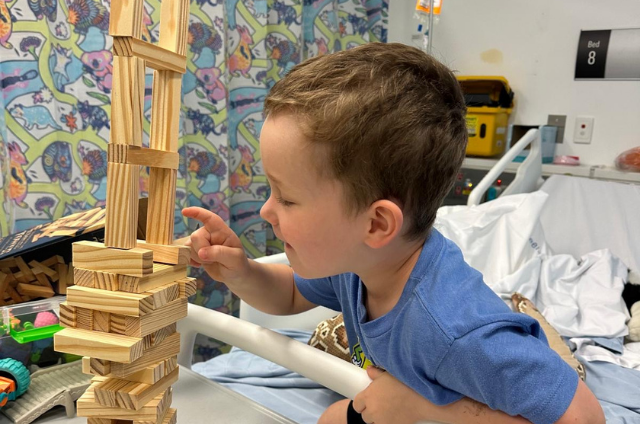
Tully was born in 2020, a bright little COVID 19 baby adored by his parents, Shelley and Tom.
When they began thinking about giving him a sibling, they decided to undergo routine genetic carrier screening. They completed the test and went back to everyday life, not expecting anything unusual.
But their world changed with one phone call. The fertility specialist rang informing them that they both were carriers for an extremely rare genetic condition: Pompe disease, an ultra-rare genetic disorder that prevents the body from breaking down glycogen, leading to muscle weakness and potential heart and breathing issues.
Suddenly, they were faced with the possibility that Tully himself had a one in four chance of having the condition—despite appearing perfectly healthy.
Two months later, their worst fear was confirmed. Their bright, happy 16-month-old had Pompe disease. He is one of just 90 Australians living with the condition.
“I blanked out during the phone call,” Shelley said.
“Testing showed he already had symptoms. He inherited the “late onset” form of the disease, and we were told that we were very lucky to have caught it early before significant muscle damage had occurred.
“The late onset version of Pompe disease could manifest at any stage from childhood to adulthood and had a wide spectrum of severity (with the severely affected patients being wheelchair and ventilator dependent), but the earlier the diagnosis, the better the outcome.”
The family ended up moving to Queensland to receive the best care possible, and Tully now visits us at Gold Coast University Hospital (GCUH) once a fortnight to receive an enzyme infusion – or how he understands it, his “muscle juice”.
“The nurses pop a needle through the skin and into his medi-port, which allows the medication to go directly into his bloodstream without needing to find a vein in the arm or hand,” Shelley said.
“He will have the infusions indefinitely.
“We were originally advised that while there was treatment there was no cure, and the disease is generally progressive despite treatment. There isn’t much long-term data because it is such a rare disease, but we don't expect him to have a rapid decline and the treatments buy us time until there's another option.”
Despite everything, Tully is thriving. He’s hitting all his milestones, has just started Prep, and loves skateboarding and swimming.
And, thanks to the genetic testing, Shelley and Tom are preparing to welcome their next bundle of joy in a few months – this time through IVF, selecting an embryo guaranteed not to have Pompe disease.
"Living with a rare disease is more than you can imagine," Shelley said.
"We're strong supporters of genetic carrier screening and newborn screening to identify potential conditions earlier and give children the best chance possible."
To learn more about Pompe disease, visit https://australianpompe.org.au/