




Multicentre, randomised trial to investigate early nasal high—flow therapy in paediatric acute hypoxaemic respiratory failure: a protocol for a randomised controlled trial—a Paediatric Acute respiratory Intervention Study (PARIS 2).

Franklin, D., Shellshear, D., Babl, F.E., Schlapbach, L.J., Oakley, E., Borland, M.L., Hoeppner, T., George, S., Craig, S., Neutze, J. and Williams, A., 2019. Multicentre, randomised trial to investigate early nasal high—flow therapy in paediatric acute hypoxaemic respiratory failure: a protocol for a randomised controlled trial—a Paediatric Acute respiratory Intervention Study (PARIS 2). BMJ open, 9(12).
Fluid bolus therapy in critically ill children: A survey of practice among paediatric intensive care doctors in Australia and New Zealand.

Gelbart, B., Schlapbach, L., Ganeshalingham, A., Ganu, S., Erickson, S., Oberender, F., Hoq, M., Williams, G., George, S. and Festa, M., 2018. Fluid bolus therapy in critically ill children: a survey of practice among paediatric intensive care doctors in Australia and New Zealand. Critical Care and Resuscitation, 20(2), p.131.


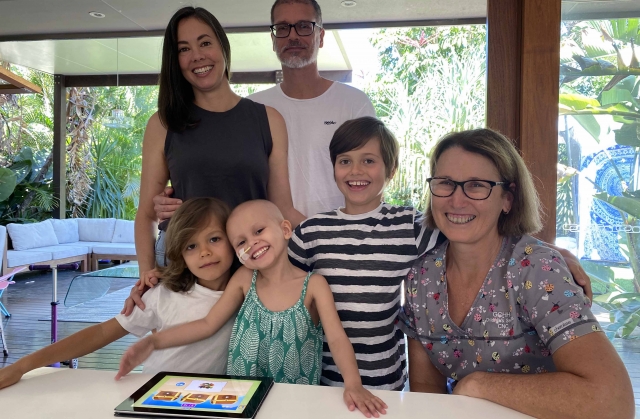
Vital hospital care delivered at home helps families during pandemic

Gold Coast Health is delivering patient care in the comfort of home for paediatric patients who are at greater risk of infection, reducing hospital trips and anxiety during COVID-19.

Increasing the scope of care the Children’s Hospital in the Home (CHITH) service can provide during the pandemic has made the world of difference to immunocompromised patients undergoing cancer treatment like four-year-old Scout Pederson.


BUCKLED RCT: Bedside ultrasound conducted in kids with distal upper limb fractures in the emergency department (randomised controlled trial)

Quick facts

Principal investigator:
Team members:
Project commenced:
2020

Children frequently present to the emergency department with forearm injuries and often have an x-ray to assess if there is a fracture. Bedside ultrasound is a test that emergency practitioners can use to rapidly diagnose a fracture at the time of examination, without exposing children to ionising radiation. This trial will assess whether an x-ray is unnecessary when there is either a buckle fracture or no fracture seen on a portable ultrasound machine. We will also determine the time and cost implications of this new approach, which could enable families to go home earlier and could be more cost-effective, with less x-rays being ordered.

Grants Awarded

Emergency Medicine Foundation
$159,458

HIIRO Early Careers Researcher Fellowship
$144,174

Wishlist Sunshine Coast Health Foundation
$19,992


Multicentre, randomised trial to investigate early nasal high—flow therapy in paediatric acute hypoxaemic respiratory failure: a protocol for a randomised controlled trial—a Paediatric Acute respiratory Intervention Study (PARIS 2).

Franklin, D., Shellshear, D., Babl, F.E., Schlapbach, L.J., Oakley, E., Borland, M.L., Hoeppner, T., George, S., Craig, S., Neutze, J. and Williams, A., 2019. Multicentre, randomised trial to investigate early nasal high—flow therapy in paediatric acute hypoxaemic respiratory failure: a protocol for a randomised controlled trial—a Paediatric Acute respiratory Intervention Study (PARIS 2). BMJ open, 9(12).

POKIE: Prospective Observational study of the cannulation of Kids in the Emergency.

Quick facts

Principal investigator:
Dr Lucy Dunstan & Dr Peter J Snelling
Team members:
Amy Sweeny, Shane George, Stuart Watkins
Project commenced:
2019

Inserting a cannula (plastic tube) into a child's vein is a common procedure performed in the Emergency Department. This can be challenging and can cause considerable distress for the child and caregiver. The use of ultrasound is well established for guiding cannulas into veins of adults who are recognised as having difficult access. However, it is less commonly used in children for this purpose. By conducting this trial, we aim to identify factors that influence the success of cannula insertion into veins of children, particularly the early identification of patients with potentially difficult access, and any factors that influence the longevity of cannulas.

Grants Awarded

POKIE: Funded by SERTA
$10,000

Emergency Medicine Foundation
$27,128


Levetiracetam versus phenytoin for second-line treatment of convulsive status epilepticus in children (ConSEPT): an open-label, multicentre, randomised controlled trial

Dalziel, S.R., Borland, M.L., Furyk, J., Bonisch, M., Neutze, J., Donath, S., Francis, K.L., Sharpe, C., Harvey, A.S., Davidson, A., Craig, S., Phillips, N., George, S., Rao, R., Cheng, N., Zhang, M., Kochar, A., Brabyn, C., and Babl, F. 2019. Levetiracetam versus phenytoin for second-line treatment of convulsive status epilepticus in children (ConSEPT): an open-label, multicentre, randomised controlled trial. The Lancet, 393(10186), pp.2135-2145.

Levetiracetam versus phenytoin for second-line treatment of convulsive status epilepticus in children (ConSEPT): an open-label, multicentre, randomised controlled trial. 

Dalziel, S.R., Borland, M.L., Furyk, J., Bonisch, M., Neutze, J., Donath, S., Francis, K.L., Sharpe, C., Harvey, A.S., Davidson, A., Craig, S., Phillips, N., George, S., Rao, R., Cheng, N., Zhang, M., Kochar, A., Brabyn, C., and Babl, F. 2019. Levetiracetam versus phenytoin for second-line treatment of convulsive status epilepticus in children (ConSEPT): an open-label, multicentre, randomised controlled trial. The Lancet, 393(10186), pp.2135-2145.

Subscribe to Children’s Critical care and Emergency