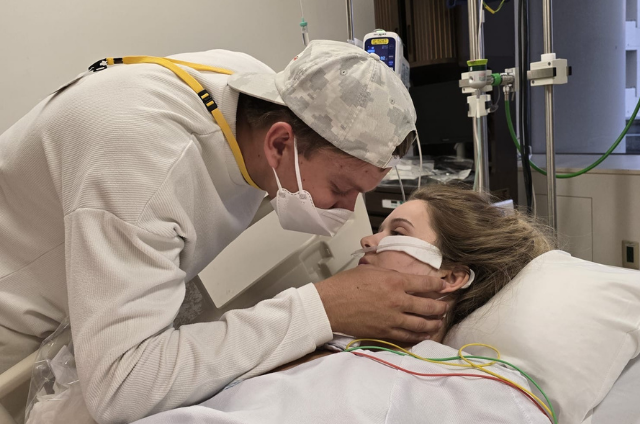
A young Gold Coast woman is urging others to learn the signs of meningococcal disease after surviving a terrifying near death experience overseas.
24-year old Anna Gallo was on a skiing holiday in Japan with her boyfriend, Liam, when she suddenly developed meningitis and septic shock.
Now on the road to recovery, she is sharing her story in the hope of raising awareness about the symptoms, and the importance of vaccination.
It was the final night of their trip on Thursday 12 February. After a Mario Kart experience and dinner out, Anna went to bed feeling completely normal when her life, and plans for the future, changed in an instant.
“In the middle of the night I woke up with my whole body aggressively shaking,” Anna said.
“I’d never shivered so much or felt so cold.”
Thinking it was a fever, she took paracetamol. Soon after, she began vomiting.
“The colour of it was black, which was quite concerning. Then later, I fainted in the bathroom. My whole body felt weak and fragile.”
Liam said the symptoms escalated rapidly.
“She had intense muscle pain, as if she’d been hit by a bus,” he said.
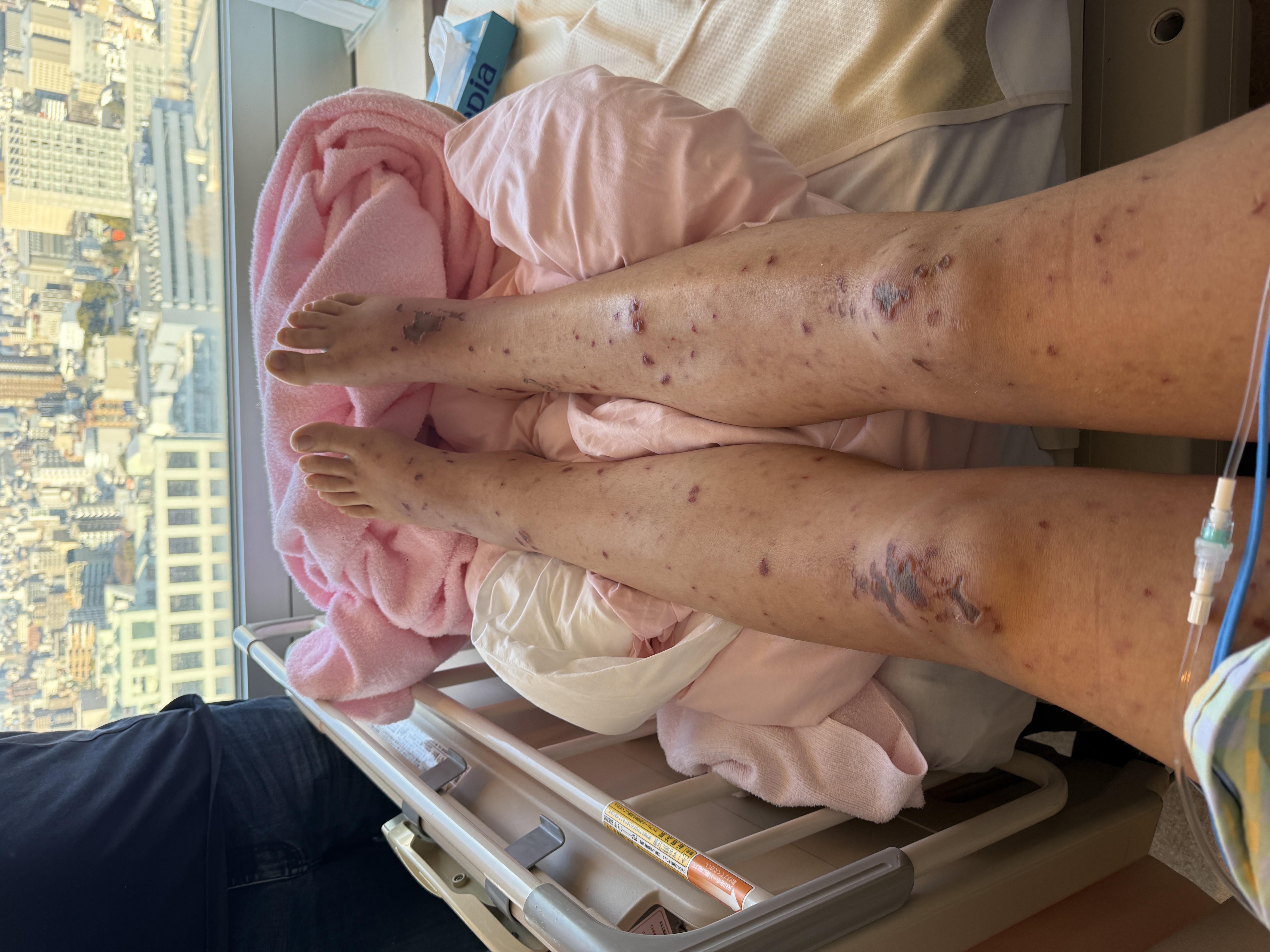
“Then I noticed a rash all over her body, like little red mosquito bites, and that’s when I realised, we needed to call an ambulance.”
By the time paramedics arrived, Anna had become delirious - a sign of advancing septic shock.
“We didn’t know what the symptoms meant,” Anna said. “It all happened so quickly.”
At hospital, intensive care specialists delivered the news no family wants to hear.
“My parents asked the doctors if I would survive and they answered with ‘we don’t know’,” Anna said.
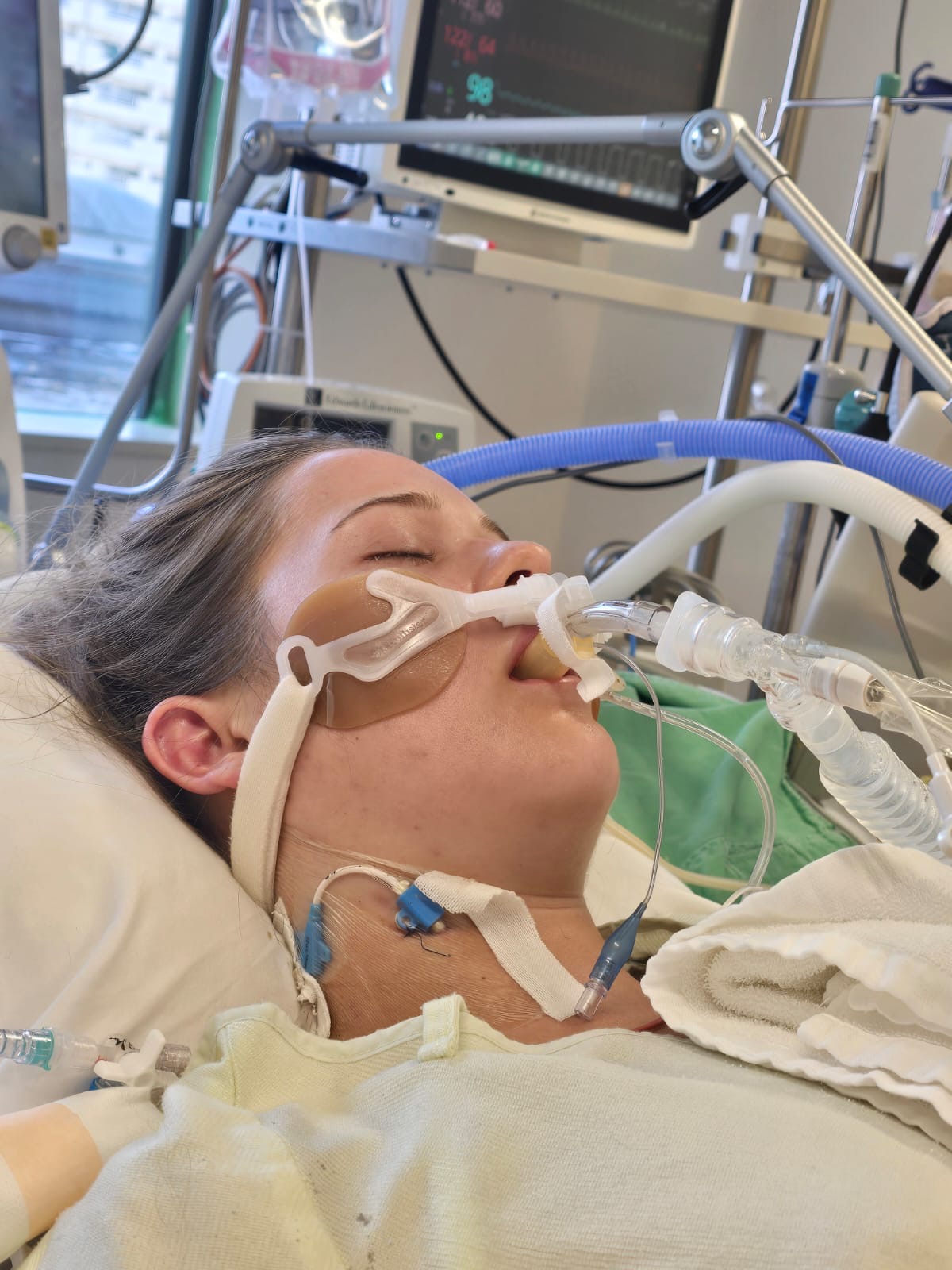
Anna was intubated and fully sedated for five days, with Liam remaining by her side and her parents flying to Japan as soon as they could.
“It was the worst few days of my life,” Liam said.
“The doctors told us that if we had waited even two more hours to get her to hospital, she wouldn’t have made it.”
Now recovering at Gold Coast University Hospital (GCUH), Anna is grateful for the care she received both overseas and at home.
“All the doctors and nurses in Japan were incredible,” she said.
“But it was such a relief to be able to speak English again when I got back to Australia.
“The nurses at GCUH have been so lovely, kind and gentle.”
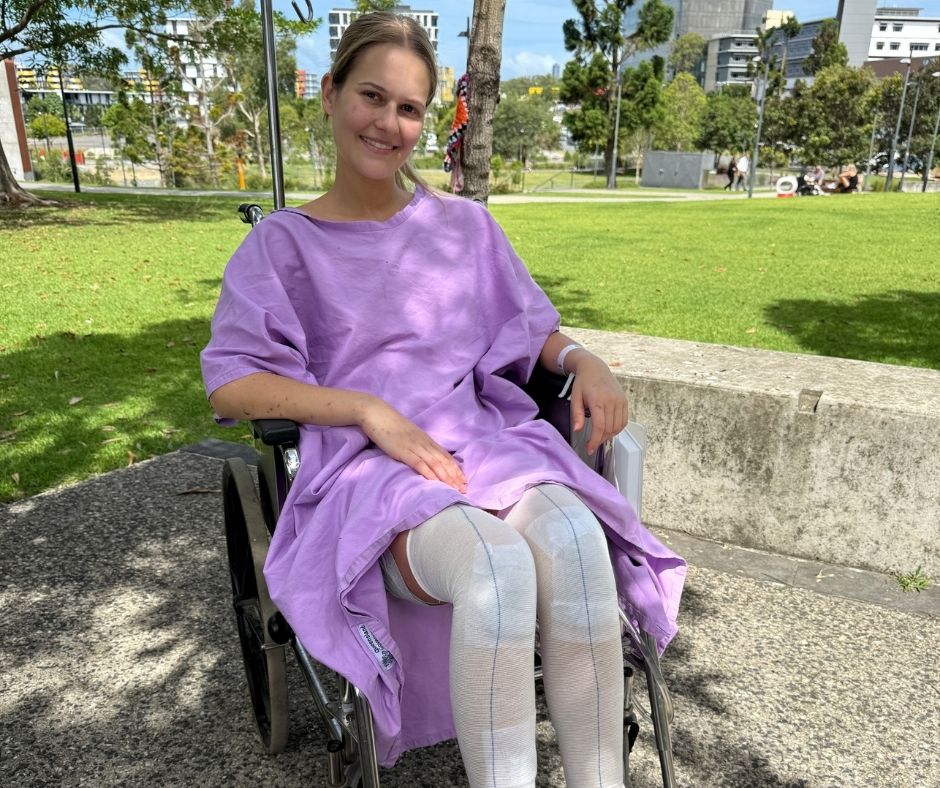
Anna’s case is even more extraordinary given how rare meningococcal disease is in Japan, where annual cases are typically in the single digits.
Australia sees higher numbers - more than 80 in 2024 – so statistically, she would have been more at risk here.
“I was vaccinated for meningococcal at school, but not for type B, which is the strain I got,” she said.
Free type B vaccinations were added to Queensland’s state funded immunisation program in March 2024. The program has included a four in one vaccine covering the A, C, W and Y strains since 2017.
“I’d encourage everyone to learn about the vaccinations available to protect them and their families, whether or not they’re on the government schedule,” Anna said.
“And if you’re planning to travel, make sure you research ahead and get immunised.”
As she begins her rehabilitation journey, Anna said the experience has changed her outlook.
“It’s crazy how quickly life can change,” she said.
“I definitely have more appreciation for life and won’t be taking anything for granted.”